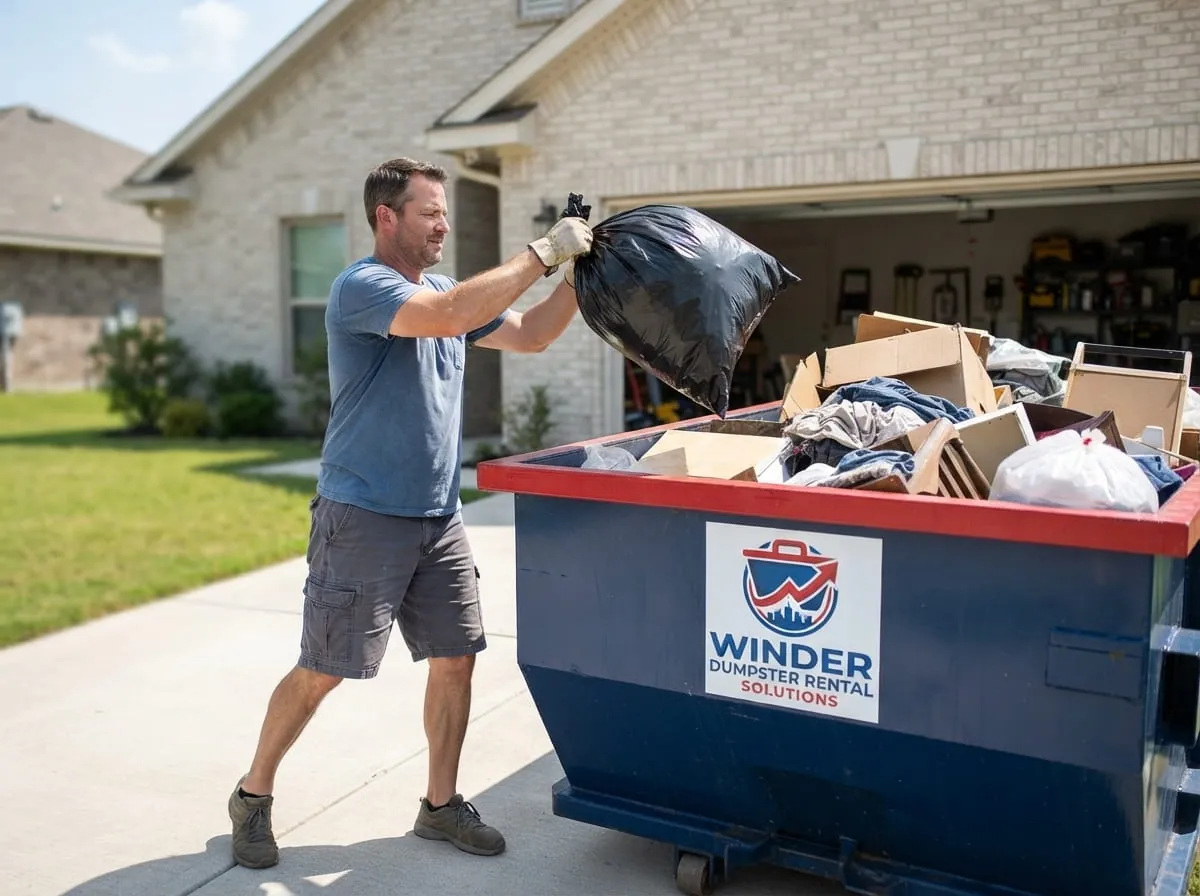
A roll-off dumpster is one of the most useful things you can park at your house during a cleanout, remodel or roofing job. It is also one of the heaviest. An empty 10-yard can weighs a few thousand pounds on its own, and once you load it with shingles, concrete, drywall or storm debris, the whole rig can press down with the force of a small vehicle sitting in one spot for a week. Add the delivery truck that rolls it off and picks it up, and you have a lot of weight moving across your driveway in a short window of time.
Here in Winder and across Barrow County, our driveways are all over the map. You have brand-new subdivision concrete that is still curing, long gravel drives on acreage out toward Statham and Bethlehem, red Georgia clay that turns to grease after a thunderstorm, and blacktop that goes soft as taffy on a 95-degree July afternoon. Each of those surfaces can mark, crack, rut or stain if a heavy container is placed on it the wrong way. The good news is that nearly all of this damage is preventable with a little planning and the right materials under the wheels. This guide walks you through exactly how to protect your driveway during a dumpster rental, written from the perspective of the folks who actually drive the trucks.
Why Roll-Off Dumpsters Can Mark or Crack Your Driveway
The damage from a dumpster almost never comes from the container simply sitting there. It comes from three things: concentrated point loads, the delivery process, and heat or moisture weakening the surface underneath.
A roll-off does not rest evenly on its whole footprint. It carries most of its weight on the rear wheels and on the two long steel rails that run underneath the box. Those contact points are narrow, so the pounds-per-square-inch they put down is high even when the total weight sounds manageable. That is the same reason a woman in high heels can dent a wood floor that a man in boots walks across fine. The dumpster concentrates its load into a few small areas, and that is where cracks and gouges start.
The second culprit is the delivery and pickup. When a truck lowers a container, the back rollers touch down first and the box slides off the rails. During pickup the cable drags the loaded box up onto the truck. Both motions involve steel rolling and sliding under tremendous weight, and that is prime territory for scraping and scratching if there is nothing between the metal and your surface.
The third factor is the surface itself. Fresh concrete has not reached full strength. Hot asphalt is pliable. Wet clay has almost no load-bearing capacity. The exact same dumpster that leaves no trace on cured concrete in October can sink into a gravel-over-clay drive in a rainy June. Understanding your surface is half the battle.
Plywood and Boards: Your Best Friend Under the Wheels
The single most effective protection you can offer is to put something broad and rigid between the dumpster and your driveway. The classic choice is plywood, and it works because it spreads the concentrated load out over a much larger area. Instead of the rear wheels pressing into a few square inches, that force gets distributed across a whole sheet, which dramatically lowers the pressure on any one spot.
For most residential drops, two layers of sturdy plywood are ideal. Use thick sheets, at least three-quarters of an inch, and doubling them up gives you a stiff pad that will not flex and crack under the wheels. Lay boards down in two places: under the rear wheels where they first touch down, and under the front contact points where the long rails rest once the box is set. If you are unsure exactly where the container will sit, a good hauler will tell you during scheduling, or you can simply lay out a generous run of boards along the whole path the box will travel.
- Use three-quarter-inch or thicker plywood, doubled up for high-weight loads like roofing or concrete.
- Place boards under the rear wheels and under the forward rail contact points.
- Extend the boards a little past where you think the container will rest, so there is margin for error during delivery.
- For long drops or heavy fills, rubber mats or thick dimensional lumber work too; the goal is always to spread the load.
This small step costs very little and protects against the vast majority of concrete scuffs, asphalt dents and gravel displacement we see.
Weight Distribution and How You Load Matters
Protecting the driveway does not end at delivery. How you fill the container affects how much pressure ends up on your surface. Try to load evenly rather than piling everything at one end, which can rock the box and concentrate weight on a single wheel. Keep the heaviest material, such as concrete, brick, tile or wet debris, spread across the floor rather than stacked in one corner.
It also helps to be realistic about weight. A dumpster packed with dense debris puts far more load on your driveway than one filled with light bulky material like furniture or cardboard. If your project involves heavy material, mention it when you book so the right size and the right protection are planned from the start. Our guide to choosing a dumpster size can help you match the container to the job, and for tear-offs specifically, our roofing dumpster guide covers the weight considerations that come with shingles.
Blazing Summer Heat and Soft Asphalt
Georgia summers are no joke, and asphalt feels every degree. On a hot, humid Winder afternoon, the surface temperature of a blacktop driveway can climb well past the air temperature, and asphalt is a material that literally softens as it heats. When it softens, it loses its ability to resist those concentrated point loads. A dumpster that would leave zero marks on cool spring asphalt can press permanent dents or ruts into the same drive in the middle of July.
If you have an asphalt driveway and you are renting in the hot months, plywood is not optional, it is essential. Doubling up the boards under every contact point spreads the load enough that the softened surface can handle it. It is also smart to schedule delivery and pickup for the cooler part of the day when possible, and to avoid letting a heavy container sit in the same exact spot for weeks on end during a heat wave. A hauler who knows the local climate will already be thinking about this.
Concrete, Gravel and the Rural Winder Driveway
New subdivisions all around Winder are going up on fresh concrete drives. Concrete is strong, but newly poured concrete keeps gaining strength for weeks, and even cured concrete can be scuffed by steel or stained by debris. For concrete, plywood protects against both the scrape marks from delivery and the rust or oil stains that can leach from a container. If your concrete is less than a few months old, be extra cautious and talk to your hauler about timing.
Plenty of Barrow County homes sit on acreage with long gravel drives, and gravel behaves very differently. Gravel can shift and displace under a heavy container, leaving ruts and bare spots, and the wheels can sink if the base is soft. For gravel, the plywood still helps, but the bigger question is the base underneath. If your gravel sits over firm, well-compacted ground, placement is usually fine with boards down. If it sits over soft clay, you want to pick the firmest, most level section of the drive and avoid low spots where water collects. Letting us know ahead of time that you have a gravel drive means we can bring extra boards and choose the drop approach carefully.
Soft Red Clay and Ruts After Georgia Storms
Anyone who has lived through a North Georgia spring knows what our red clay does when it gets wet. It turns slick, soft and sticky, and it loses almost all of its ability to carry weight. A delivery truck or a loaded dumpster set on saturated clay can sink in and leave deep ruts that are a real headache to repair, and the truck itself can get stuck.
If you are placing a container on bare ground or on grass over clay, timing matters enormously. Try to schedule around the weather so the ground is dry and firm, not in the days right after a heavy storm. Choose the highest, best-drained spot available, lay down a generous pad of boards or heavy plywood, and avoid any area where you can see standing water or mud. When clay is truly soaked, the safest move is often to wait a day or two for it to firm up, or to place the container on a paved or graveled section instead. A good hauler would rather reschedule than tear up your yard.
Backing, Loading and Pickup Care
The moments of delivery and pickup are when most driveway damage happens, so a careful approach pays off. Clear the path of toys, hoses, low branches and parked cars so the driver has a straight, unobstructed line and does not have to maneuver sharply. Sharp turns under load are where tires scuff and gouge. Point out anything fragile in advance, like a decorative concrete apron, irrigation heads near the drive, or a septic line crossing the driveway, so the driver can steer clear.
During your project, be mindful when you load. Dragging heavy, sharp material across the lip of the container or across the ground near it can chip concrete or scratch asphalt. Set heavy pieces down rather than throwing them, both for the container and for whatever is underneath it.
What a Good Hauler Does Automatically
Experienced local haulers protect your property as a matter of routine. That means asking about your surface when you book, bringing boards for the contact points, placing the container thoughtfully rather than dropping it in the first convenient spot, and driving with care during delivery and pickup. It means knowing that Winder asphalt gets soft in July and that red clay gets treacherous after a storm, and planning around both. At Winder Dumpster Rental Solutions we treat your driveway like it is our own, and we are happy to talk through placement before we ever show up.
Whether you are cleaning out a home, tackling a remodel or clearing storm debris, a little preparation keeps your driveway looking exactly the way it did before the dumpster arrived. Explore our residential dumpster rental options, and when you are ready to book, our team will help you pick the right size and the right protection for your specific surface.
Ready to Rent Without Risking Your Driveway?
We serve homeowners throughout Winder and Barrow County, and we are glad to walk you through placement, timing and surface protection before delivery. Call Winder Dumpster Rental Solutions today at (762) 356-6331 or reach out through our contact page to schedule a drop that keeps your driveway safe.

Owner, Winder Dumpster Rental Solutions — sharing straight advice from years of local hauling across Winder and Barrow County.
Frequently Asked Questions
Will a roll-off dumpster crack my concrete driveway?
It can if it is placed carelessly, because the container concentrates its weight on narrow rear wheels and steel rails. Putting doubled plywood under those contact points spreads the load and prevents cracks and scuff marks. Newly poured concrete that is still curing deserves extra caution, so let us know the age of your drive when you book.
What should I put under a dumpster to protect my driveway?
Thick plywood, at least three-quarters of an inch and ideally doubled up, is the best and most affordable option. Place it under the rear wheels and under the forward rail contact points. Heavy dimensional lumber or rubber mats also work. The goal is always to spread the container's weight over a larger area so no single spot takes too much pressure.
Is hot summer weather in Georgia really a problem for asphalt driveways?
Yes. Asphalt softens as it heats, and on a hot, humid Winder afternoon a blacktop drive can get soft enough that a heavy container presses permanent dents into it. In summer, always use doubled plywood on asphalt, try to schedule for cooler parts of the day, and avoid leaving a heavy container in one spot for weeks during a heat wave.
Can I place a dumpster on a gravel or dirt driveway in rural Barrow County?
Usually yes, but the base matters. Gravel over firm ground handles a container well with boards down, while gravel or dirt over soft red clay can rut or sink, especially after rain. Pick the firmest, most level and best-drained spot, lay down plenty of plywood, and avoid delivery right after a storm. Tell us it is a gravel or dirt drive so we bring extra boards.
What happens if it rains and my red clay ground gets soft?
North Georgia red clay loses almost all of its load-bearing strength when soaked, which can leave deep ruts under a truck or loaded container. If the ground is saturated, it is best to wait a day or two for it to firm up, choose a paved or graveled section instead, or reschedule. A careful hauler would rather delay than tear up your yard.