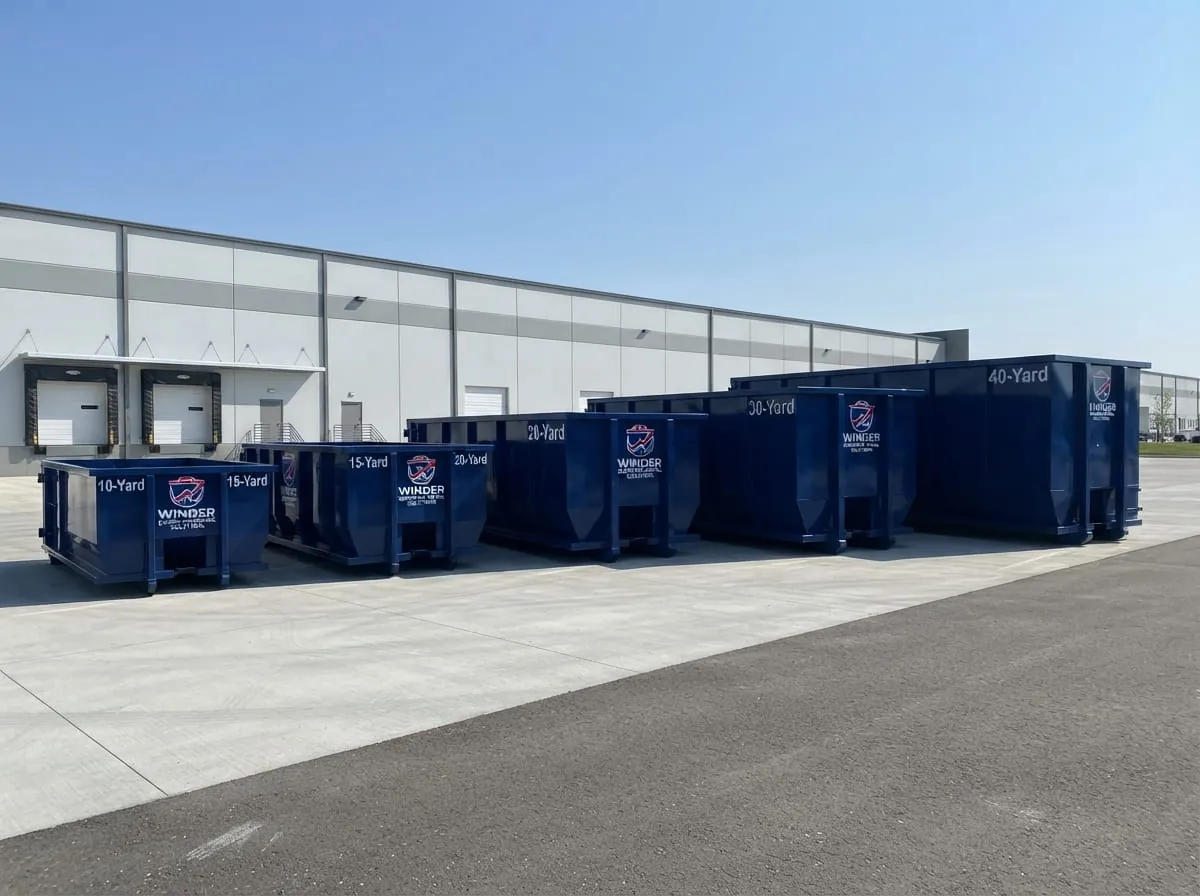
Managing waste responsibly is part of daily life in Winder, Georgia, whether you are a homeowner clearing out a garage, a contractor finishing a remodel in a Barrow County subdivision, or a business keeping a storefront tidy along Broad Street. Knowing how local sanitation and recycling actually work helps you save money, stay compliant, and keep our shared creeks, rivers, and lakes clean. This guide from Winder Dumpster Rental Solutions walks through curbside service, the county landfill and convenience centers, construction debris, household hazardous waste, electronics, storm cleanup, and how renting a dumpster fits the bigger jobs.
How Curbside Service Works in the City of Winder
Residents inside the City of Winder typically receive sanitation service through the city, including regular trash pickup and, in many neighborhoods, curbside recycling or yard waste collection on a set schedule. Service days, accepted materials, and cart requirements can change, so the most reliable move is to confirm current details directly with the City of Winder Public Works or sanitation department. If you live in unincorporated Barrow County rather than inside city limits, your collection may be handled differently, sometimes through a private hauler or by self-hauling to a county facility.
A few habits make curbside service smoother for everyone:
- Place carts out the night before or early on your collection morning, with wheels toward the house and lids closed.
- Keep carts a few feet apart and clear of mailboxes, parked cars, and low branches so the truck arm can reach them.
- Break down cardboard boxes so they fit inside the recycling cart rather than stacking loose material that can blow into the street.
- Bag loose trash to keep litter out of gutters and storm drains that eventually feed local creeks.
Curbside carts are sized for everyday household waste. They are not designed for the volume a renovation, a move-out, or a major cleanout produces, which is where a roll-off dumpster becomes the practical solution.
Recycling in Winder and Barrow County
Recycling in the Winder area generally focuses on the common, high-value materials that have steady markets: corrugated cardboard, mixed paper, aluminum and steel cans, and certain plastics. Glass acceptance varies by program and can change over time. Because the rules for curbside versus drop-off recycling are not identical, and because contamination (putting the wrong item in the bin) can cause whole loads to be landfilled, it is worth taking a minute to check the current accepted-materials list with the City of Winder or Barrow County before you sort.
A short, dependable set of "clean recycling" rules applies almost everywhere:
- Empty and lightly rinse food and beverage containers so residue does not spoil the batch.
- Keep recyclables loose, not bagged in plastic, unless your specific program says otherwise.
- Leave out plastic bags and film, foam containers, food-soiled paper, and tangled items like hoses or wire that jam sorting equipment.
- When in doubt, throw it out, rather than "wish-cycling" a questionable item into the recycling stream.
The Barrow County Landfill and Convenience Centers
For materials that fall outside curbside service, Barrow County operates solid waste facilities, including convenience centers where residents can drop off household trash and recyclables, and arrangements for disposal of larger volumes. Convenience centers are a good fit for small, occasional loads: a few bags of trash, bundled cardboard, scrap metal, or seasonal cleanup. Hours, accepted materials, resident access rules, and any fees are set locally and can be adjusted, so verify the current details with Barrow County Solid Waste before you load the truck.
Convenience centers have limits, though. They are not built for a steady stream of heavy construction debris or a whole-house cleanout, and repeated trips in a pickup add up quickly in fuel, time, and tailgate loads that scatter debris on county roads. When the volume climbs, a single roll-off dumpster delivered to your site is cleaner, safer, and usually cheaper than a dozen runs.
Construction and Renovation Debris
Remodels, additions, roof replacements, and demolition generate dense, heavy waste: drywall, lumber, shingles, flooring, tile, concrete, and old fixtures. Much of this can be diverted rather than simply buried. Clean wood, metal, and cardboard are often recyclable, and salvageable cabinets, doors, and fixtures can be donated to building-reuse outlets. Separating these materials on the job site reduces what you pay to dispose of and keeps usable goods in circulation.
Some construction materials need special handling. Concrete, brick, and asphalt are heavy and may be accepted only at specific facilities, sometimes for recycling into aggregate. Older homes can contain asbestos or lead-based paint, which carry strict federal and state handling rules; if you suspect either, stop and consult a licensed professional and the Georgia Environmental Protection Division (EPD) before disturbing the material. For a plain-language overview of handling the common materials, our guide on how to dispose of construction debris is a helpful starting point, and our residential dumpster rental service is sized for exactly these projects.
A roll-off dumpster keeps a job site organized and compliant. Instead of debris piling up where it can wash into storm drains, it goes into one contained unit that we haul and sort at the appropriate facility.
Household Hazardous Waste
Everyday products can be surprisingly hazardous: paint and stains, solvents, pesticides and lawn chemicals, pool chemicals, automotive fluids, batteries, and fluorescent bulbs. These must never go in your curbside trash, down a storm drain, or into a dumpster, because they can contaminate soil, groundwater, and the surface water that drains to the Mulberry and Apalachee River systems.
Many communities in Georgia host periodic household hazardous waste (HHW) collection events where residents can drop off these materials safely and for free. Dates and locations are scheduled seasonally and change year to year, so rather than relying on a fixed date, check with the City of Winder, Barrow County, or Georgia EPD for the next announced event. In the meantime:
- Keep products in their original, labeled containers whenever possible.
- Let latex paint dry out completely (with the lid off, away from children and pets) if your area allows dried latex in regular trash, and take leftover oil-based paint to an HHW event.
- Store incompatible chemicals separately and out of reach until you can dispose of them properly.
Electronics and Appliances
Old computers, TVs, phones, and small electronics contain both valuable metals and components that do not belong in a landfill. E-waste is often accepted at dedicated recycling events or drop-off points; retailers and manufacturers sometimes offer take-back programs as well. Large appliances, especially refrigerators, freezers, and air conditioners, contain refrigerants that must be recovered by a certified technician before the unit is scrapped, so these require specific handling rather than a toss in the trash.
If appliances or electronics are part of a larger cleanout, our junk removal team can separate these items for proper routing while the rest of the load goes into a dumpster, saving you the sorting headache.
Yard and Storm Debris
Northeast Georgia's weather, from spring and summer thunderstorms to the occasional remnants of tropical systems, can bring down limbs and whole trees across Barrow County. Routine yard waste (grass, leaves, pruned branches) is often collected or accepted separately from regular trash and is ideal for composting or mulching rather than landfilling. After a storm, debris volume can spike well beyond what curbside service handles.
Keeping storm debris out of ditches and creeks matters here: branches and leaves washed into waterways contribute to flooding and degrade water quality downstream in the Mulberry River headwaters and the broader watershed. For ongoing cleanup, our yard waste removal service handles organic debris, and for major storm cleanups a roll-off dumpster gives you a single place to pile everything until it is hauled.
Protecting Our Local Waters
Winder sits in the Piedmont near the headwaters of the Mulberry River, with Fort Yargo State Park and its lake a short drive away, drawing paddlers, swimmers, and anglers throughout the year. What goes into our streets and yards can end up in those waters. Storm drains are not connected to treatment plants; they discharge straight to creeks. That is why proper disposal is not just about tidiness but about protecting the lake at Fort Yargo, the fish and wildlife in the Mulberry and Apalachee systems, and the drinking-water sources downstream.
Simple practices go a long way: never pour chemicals or paint down a drain, sweep up rather than hose off construction dust and debris, cover loads when hauling, and contain renovation waste in a dumpster instead of leaving it exposed to rain and wind.
How a Dumpster Fits the Big Jobs
Curbside carts and convenience centers cover the everyday. For anything larger, a roll-off dumpster is the efficient choice. Common Winder-area projects that call for one include whole-house or estate cleanouts, garage and basement purges, kitchen and bathroom remodels, roof tear-offs, flooring replacement, deck demolition, moving-out hauls, and post-storm yard cleanup.
| Project | Typical fit | Why a dumpster helps |
|---|---|---|
| Garage or estate cleanout | Small to mid roll-off | One container for mixed household junk; we sort recyclables and e-waste |
| Kitchen or bath remodel | Mid roll-off | Handles cabinets, tile, drywall, and fixtures in one place |
| Roof replacement | Heavy-duty roll-off | Sized for dense shingle weight and kept off the lawn |
| Storm or yard cleanup | Open-top roll-off | Contains limbs and debris; keeps it out of ditches and creeks |
Before you book, it helps to know what is and is not allowed in the container. Our overview of what can go in a dumpster covers the common do's and don'ts, and you can always contact us with questions about your specific load. To see the full range of options, visit our services page.
Whether you are tackling a renovation, clearing a property, or cleaning up after a storm, keeping debris contained and routed to the right place protects both your budget and Winder's waterways. Call Winder Dumpster Rental Solutions at (762) 356-6331 to get the right dumpster delivered and let us handle the rest.

Owner, Winder Dumpster Rental Solutions — sharing straight advice from years of local hauling across Winder and Barrow County.
Frequently Asked Questions
Does the City of Winder provide curbside recycling?
Many Winder neighborhoods receive curbside trash and some form of recycling or yard waste collection through city sanitation, but service details and accepted materials can change and differ for unincorporated Barrow County. Confirm your current schedule and accepted items with the City of Winder Public Works, and remember that curbside carts are meant for everyday household waste, not large cleanouts or renovation debris.
Where can I take household trash and recycling if I'm outside city limits?
Barrow County operates solid waste facilities, including convenience centers where residents can drop off household trash and recyclables. Hours, access rules, accepted materials, and any fees are set locally and can change, so verify the current details with Barrow County Solid Waste before you go. Convenience centers suit small, occasional loads; for heavy construction debris or whole-house cleanouts, a roll-off dumpster is more practical.
How do I dispose of paint, chemicals, and other hazardous waste in Winder?
Household hazardous waste such as paint, solvents, pesticides, pool chemicals, automotive fluids, and batteries must never go in curbside trash, a dumpster, or a storm drain. Many Georgia communities hold periodic collection events for these materials. Dates and locations change seasonally, so check with the City of Winder, Barrow County, or Georgia EPD for the next announced event, and store products safely in labeled containers until then.
What should I do with construction debris from a remodel?
Separate recyclable clean wood, metal, and cardboard, and donate salvageable fixtures where possible. Heavy materials like concrete and asphalt may need a specific facility, and older homes can contain asbestos or lead paint that require licensed handling and EPD guidance. For most remodels, a roll-off dumpster keeps the job site organized and ensures debris is hauled and sorted properly instead of washing into local creeks.
Why does proper disposal matter so much in the Winder area?
Winder sits near the Mulberry River headwaters, with Fort Yargo State Park and its lake nearby. Storm drains flow straight to creeks, not treatment plants, so chemicals, paint, and loose debris that reach streets and yards can end up in the lake and the Mulberry and Apalachee watersheds. Containing waste in a dumpster and routing hazardous items correctly protects water quality and local recreation downstream.