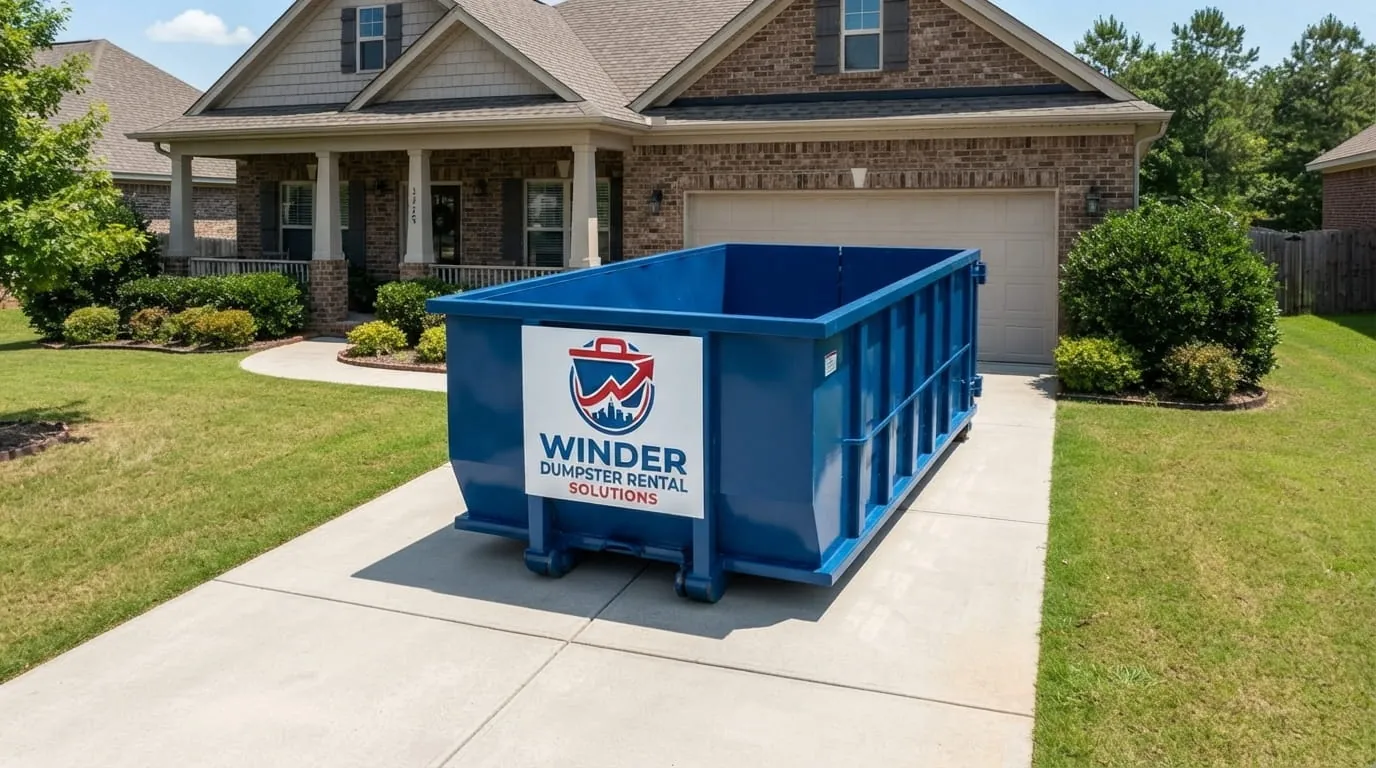
On a Barrow County job site, construction and demolition (C&D) debris is not one waste stream — it is six or eight of them stacked in a pile, and how you separate that pile determines your tipping fees, your haul count, and whether your project clears its diversion targets. With Winder sitting squarely in the Atlanta exurb growth corridor, GCs and remodelers here are framing new Piedmont subdivision lots, gutting tear-downs along Candler Street, and punching out commercial pads on the GA-316 spine faster than ever. Every one of those jobs generates debris, and the crews that handle it methodically keep more money on the P&L than the crews that throw everything in one box and hope.
This guide walks through the practical mechanics of disposing of C&D debris the right way in Winder and the surrounding Barrow County market: what the material types are, why heavy inert debris has to ride in its own bin, what actually recycles locally, how to stage containers on tight subdivision lots, and how to stay inside Georgia EPD and local facility rules without slowing the schedule.
Know Your C&D Waste Streams Before the First Dumpster Lands
The term "construction debris" covers materials with wildly different weights, recycling paths, and disposal costs. Sorting them in your head before the project starts is the single highest-leverage habit a contractor can build. Here is how the major streams break down on a typical Winder-area build or remodel.
Lightweight and Mixed Construction Debris
- Lumber and dimensional wood — framing offcuts, broken studs, OSB, plywood scrap, and pallets. Bulky but light, this is the backbone of most mixed loads.
- Drywall / gypsum board — generated heavily on both new builds and remodels. Clean, unpainted gypsum is recyclable in some markets, but drywall also produces hydrogen sulfide gas when it breaks down wet in a landfill, which is why some facilities handle it separately.
- Siding — vinyl, fiber cement (Hardie), and wood siding. Vinyl is light; fiber cement is deceptively heavy and dusty.
- Roofing — asphalt shingles dominate residential tear-offs. Shingles are heavy per square foot and often restricted or surcharged, so they frequently warrant a dedicated bin on a reroof.
- Cardboard, packaging, insulation, and general trash — the fill-in material on every job.
Heavy Inert Debris — The Category That Breaks Budgets
- Concrete — slabs, footings, sidewalks, driveway demo.
- Brick and block — chimney tear-downs, foundation masonry, CMU.
- Dirt, soil, and Georgia red clay — excavation spoils and site grading. In the Piedmont, that heavy red clay is dense and water-retaining, which makes it some of the heaviest material you will ever load.
- Asphalt, rock, and gravel — paving demo and base material.
These "inert" materials are chemically stable and often recyclable, but they share one brutal property: weight. A single 20-yard box filled with concrete or wet red clay can push well past what a roll-off truck is legally permitted to haul on Georgia roads. That is the whole reason the industry treats them differently, and it is where most first-time cost overruns come from.
Why Concrete, Red Clay, and Dirt Need a Dedicated Bin
Roll-off dumpsters are rated by two limits at once: volume (how many cubic yards fit) and weight (how many tons the truck can legally and safely carry). Mixed C&D debris is light enough that you usually fill a 30-yard box to the top before you ever hit the weight cap. Heavy inert debris is the opposite — you hit the tonnage limit when the box is barely a third full.
Here is the practical math that trips up Winder contractors. Loose concrete runs roughly 2,000 to 2,400 pounds per cubic yard. Wet red clay and soil are in the same neighborhood or heavier. That means just 8 to 10 cubic yards of concrete already weighs 10 tons — the point at which most trucks are maxed out. If you dump concrete into a mixed 30-yard container, you create an unhaulable box: too heavy to lift, over DOT axle limits, and subject to overage fees that can dwarf the base rental.
The solution is simple and non-negotiable: heavy inert debris rides in its own small, dedicated container. For concrete, brick, block, and clean dirt, a right-sized dedicated bin keeps you under the weight limit and routes the material to a recycling or inert-fill facility instead of a general landfill. If you have a demolition component or a lot of masonry, talk through the load with your hauler up front — our concrete and heavy debris service exists specifically to keep these loads legal and affordable, and our demolition debris removal crews stage separate inert bins on tear-down jobs as a matter of course.
The Golden Rule of Weight
Never mix heavy inert debris with light mixed debris in the same box unless your hauler has explicitly approved it. The two streams want opposite container sizes, hit opposite limits, and route to opposite facilities. Keep them apart from the first load and you will never see a surprise overage line on your invoice.
Separating Debris on the Job Site
Source separation — sorting debris into dedicated streams at the point it is generated — is far cheaper and cleaner than back-end sorting. On a Winder subdivision lot or a GA-316 commercial build, a workable separation plan usually looks like this:
- Container 1 — Mixed C&D: lumber, drywall, siding, insulation, packaging, and general construction trash. A 30-yard dumpster is the workhorse here because the material is bulky and light.
- Container 2 — Heavy inert: concrete, brick, block, and clay. A 20-yard dumpster (often loaded only partway) handles this because weight, not volume, is the limit.
- Container 3 (project-dependent) — Single-stream recyclable: clean metal, clean cardboard, or shingles on a dedicated reroof. These streams carry the best rebate or lowest tipping cost when kept clean.
Clear labeling and a two-minute crew briefing at mobilization do more for separation discipline than any amount of back-end effort. Metal especially is worth pulling — copper, aluminum, and steel scrap carry real salvage value, and keeping them out of the mixed box both lowers your tonnage and puts cash back in the job.
What Actually Recycles in the Winder Area
Georgia has a reasonably mature C&D recycling infrastructure, and Barrow County contractors sit within reach of metro Atlanta's processing capacity. The materials with the strongest recycling paths locally are:
- Concrete, brick, and block — crushed and reused as aggregate base, road fill, and drainage stone. This is the single highest-volume C&D material diverted from landfills statewide.
- Scrap metal — universally recyclable with salvage value; never landfill it.
- Clean wood — untreated, unpainted lumber can be ground for mulch or biomass at facilities that accept it.
- Cardboard and clean packaging — easily diverted when kept dry and separate.
- Asphalt shingles — recyclable into road paving material at specialized processors; availability varies, so confirm with your hauler before committing a reroof to a recycling route.
- Clean gypsum/drywall — recyclable at select facilities when free of paint, screws, and contamination.
What generally does not recycle easily: painted or treated wood, contaminated or wet drywall, mixed/dirty loads, and anything commingled with general trash. The lesson is the same one that runs through this entire guide — cleanliness and separation are what unlock recycling value. A mixed, dirty box goes to the landfill at full price; a clean, separated stream recycles cheaper and often earns a rebate.
Job-Site Container Logistics on Piedmont Subdivision Lots
New-construction lots in Winder's growing subdivisions come with their own staging headaches. Lots are narrow, graded, and often muddy with that red Piedmont clay for weeks at a time. A few hard-won logistics rules keep the debris plan from becoming the schedule's bottleneck:
- Plan the drop before the slab. Place the container where the delivery truck can get in and out without crossing freshly poured concrete, buried utilities, or a soft graded pad that will swallow a loaded box after a rain.
- Protect the surface. On finished driveways or new asphalt, plywood or boards under the rails prevent gouging and cracking. A roll-off's weight concentrated on four small contact points will mark a green driveway.
- Keep the swing clear. Leave 60-plus feet of straight approach and overhead clearance free of wires and tree limbs so the truck can tilt and set the box.
- Right-size and sequence. On a multi-phase build, a swap-out schedule — demo bin first, framing bin next, finish bin last — keeps one correctly sized container on site per phase instead of a graveyard of half-full boxes.
- Load low and even. Never load above the fill line, and distribute weight across the floor of the box, not piled at one end. Overloaded or unevenly loaded boxes get refused at pickup.
If you are running multiple active lots, standardizing on a single hauler and a consistent container program keeps billing clean and swaps predictable. Our roll-off dumpster rental program is built around that kind of repeatable subdivision workflow, and our construction dumpster rental service handles the phased swap-outs that keep a build moving.
Diversion and LEED Basics for Commercial Builds
On GA-316 commercial projects and larger developments, waste diversion is increasingly written into the specs. Even where it is not formally required, tracking it is smart practice. The core concepts every GC should understand:
- Diversion rate is the percentage of total project waste, by weight, kept out of the landfill through recycling, reuse, or salvage. A 75 percent diversion rate means three-quarters of your debris tonnage was recycled or reused.
- LEED credits under Materials and Resources reward construction waste management, typically requiring documented diversion of 50 percent or more across at least two material streams. Concrete and metal alone often get a project most of the way there.
- Documentation is the deliverable. Diversion credit lives or dies on weight tickets. Keep every tipping and recycling receipt, logged by stream, and your hauler should be able to provide the tonnage reporting that substantiates the claim.
Even on residential and non-certified work, the diversion mindset pays: the more you recycle concrete and metal, the lower your net disposal cost, because those streams tip cheaper than mixed landfill waste.
Staying Compliant with Georgia EPD and Barrow County Rules
Georgia's Environmental Protection Division (EPD) regulates solid waste handling statewide, and C&D debris has to go to a permitted facility — a C&D landfill, a permitted inert/landclearing site, or a licensed transfer station. A few compliance fundamentals for Barrow County contractors:
- Use permitted facilities only. Dumping C&D on an unpermitted site, including a private lot, violates EPD rules and county ordinance and exposes you to serious fines. Your licensed hauler already routes to permitted destinations.
- Never burn or bury on site. Open burning of construction debris is prohibited, and burying it is illegal dumping.
- Handle regulated materials correctly. Asbestos-containing materials, lead paint debris, and any hazardous waste fall outside normal C&D handling and have their own strict EPD requirements — test suspect materials on pre-1980 tear-downs before demo.
- Inert vs. C&D destinations differ. Clean concrete, brick, and dirt can often go to lower-cost inert/landclearing facilities, while mixed C&D goes to a C&D landfill. This is another reason separation saves money — it unlocks the cheaper destination.
The simplest way to stay compliant is to work with a local hauler who knows the Barrow County and metro-Atlanta facility network and handles the routing for you. That removes the guesswork about which facility takes which stream and keeps your weight tickets clean for any diversion reporting you need later.
Putting It All Together on Your Next Winder Job
Disposing of construction debris well is really about four disciplined habits: identify your streams before you start, keep heavy inert material in its own weight-limited bin, separate recyclables at the source, and route everything to permitted facilities with the paperwork to prove it. Do those four things and you convert debris from a cost center that surprises you into a line item you control.
For a deeper look at what each container will and will not accept, our guide on what can go in a dumpster breaks down the specifics. And when you are ready to spec the right mix of containers for a new subdivision lot, a tear-down, or a GA-316 commercial build, our team knows the local facilities and the Georgia rules cold.
Call Winder Dumpster Rental Solutions at (762) 356-6331 to size the right containers for your project, or reach out through our contact page and we will build a debris plan that keeps your job legal, clean, and on budget. Browse all of our container services to see what fits your next build.
Owner, Winder Dumpster Rental Solutions — sharing straight advice from years of local hauling across Winder and Barrow County.
Frequently Asked Questions
Why can't I put concrete and dirt in the same dumpster as my other construction debris?
Because they hit opposite limits. Mixed C&D debris like lumber and drywall is light, so you fill the box by volume before weight is an issue. Concrete, brick, and Georgia red clay run roughly 2,000 to 2,400 pounds per cubic yard, so you hit the truck's legal weight cap when the box is barely a third full. Mixing them creates an unhaulable, overloaded container and triggers overage fees. Heavy inert debris always needs its own dedicated, weight-limited bin.
What size dumpster do I need for a new subdivision construction job in Winder?
For bulky, lightweight mixed C&D debris such as framing lumber, drywall, and siding, a 30-yard roll-off is the workhorse. For heavy inert material like concrete and clay from excavation or demo, a 20-yard box loaded only partway keeps you under the weight limit. On a phased build, plan a swap-out sequence by phase rather than putting one oversized box on the lot for the whole project. We can spec the right mix once we know your lot and scope.
What construction materials can be recycled in the Barrow County area?
The strongest local recycling paths are concrete, brick, and block (crushed into aggregate), scrap metal (always recycle it, it has salvage value), clean untreated wood, dry cardboard, and often asphalt shingles and clean gypsum drywall at specialized facilities. The key is keeping those streams clean and separated. A mixed, dirty box goes to the landfill at full price, while a clean separated stream recycles cheaper and sometimes earns a rebate.
Do I need to track waste diversion for LEED on a commercial project?
If your GA-316 commercial build is pursuing LEED, the Materials and Resources credits typically require documented diversion of 50 percent or more by weight across at least two streams, and concrete plus metal often get you most of the way there. The deliverable is documentation, so keep every weight ticket logged by stream. Even on non-certified work, tracking diversion pays off because recycled concrete and metal tip cheaper than mixed landfill waste.
Where is it legal to dispose of construction debris in Winder, Georgia?
C&D debris must go to a facility permitted by the Georgia Environmental Protection Division, meaning a permitted C&D landfill, a permitted inert or landclearing site, or a licensed transfer station. Clean concrete, brick, and dirt can often go to lower-cost inert facilities, while mixed C&D goes to a C&D landfill. Dumping on an unpermitted site, burning, or burying debris is illegal and carries serious fines. Working with a licensed local hauler handles the routing and keeps your weight tickets clean.