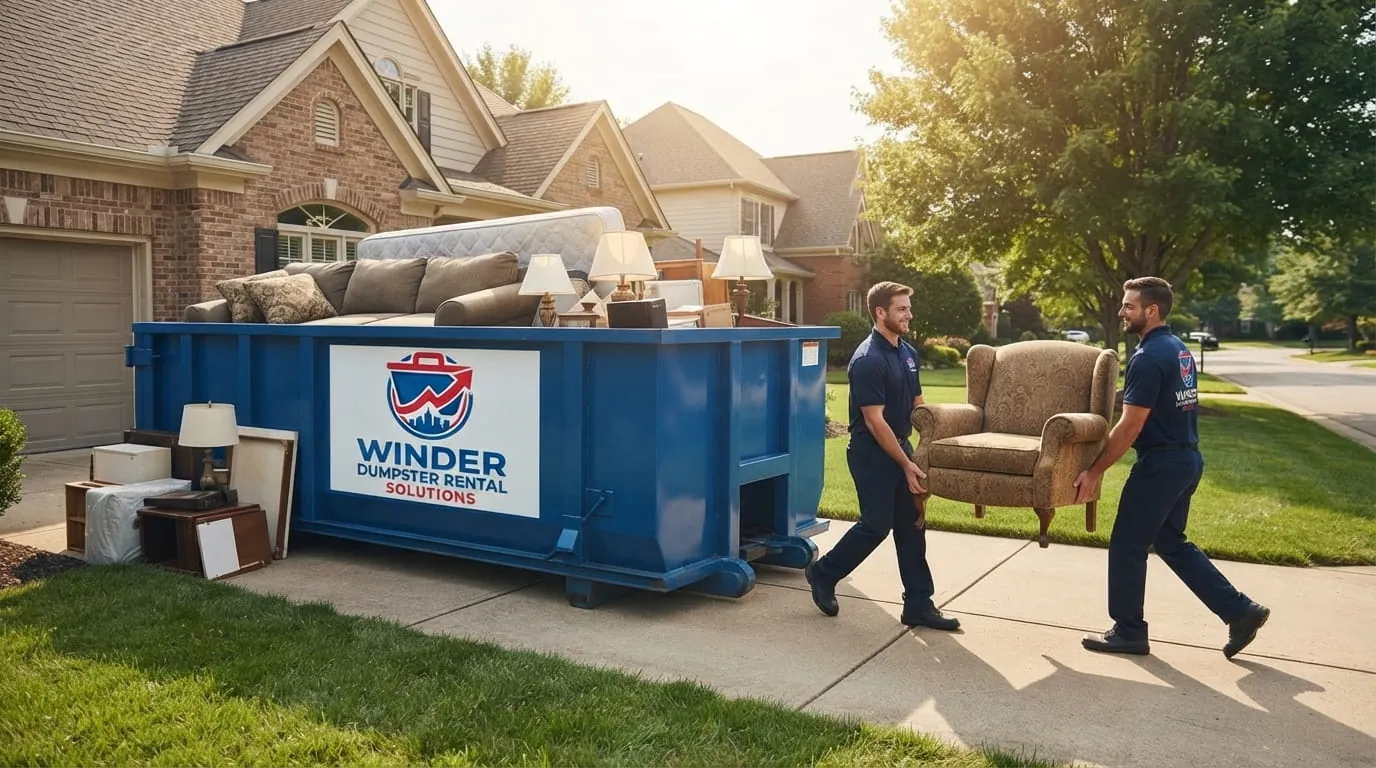
One of the most common questions we hear at Winder Dumpster Rental Solutions is also one of the most important: "What can I actually put in this thing?" It is a fair question. A roll-off dumpster is a wonderfully simple tool, but Georgia landfill rules, state environmental law, and plain old weight limits mean that not everything from your garage, yard, or job site is fair game. Toss the wrong item in and you could face surcharges, a rejected load, or a cleanup headache that defeats the whole purpose of renting.
This guide lays it out plainly for homeowners, contractors, and property managers here in Winder and across Barrow County. We will cover what you can throw in without a second thought, what is flat-out prohibited, what is restricted or carries an extra fee, and — just as important — why those rules exist and where to take the banned items instead. By the time you reach the bottom, you will be able to load your dumpster with confidence and avoid the surprises that trip people up.
What You Can Put in a Dumpster
The good news is that the vast majority of what most people need to get rid of is perfectly acceptable. Roll-off dumpsters are built for bulky, heavy, and awkward loads, and our containers handle the full range of everyday cleanout and renovation debris. Here is what sails through without issue:
- Household junk and clutter — boxes, packing material, toys, books, clothing, small non-electronic goods, general trash bags, and the random accumulation of a basement, attic, or garage cleanout.
- Furniture — couches, chairs, tables, dressers, bookshelves, desks, and other wood, metal, or upholstered pieces. (Mattresses are the one exception — more on those below.)
- Construction and demolition debris — lumber, drywall, plaster, insulation, cabinetry, trim, siding, subfloor, windows, and doors from remodels and tear-outs.
- Yard and storm debris — branches, limbs, brush, leaves, shrubs, and the tangle of debris left behind after a Georgia thunderstorm or ice event.
- Roofing — asphalt shingles, underlayment, and flashing. Roofing is heavy, so size your container accordingly.
- Flooring — carpet, padding, tile, laminate, hardwood, and vinyl plank torn up during a renovation.
In short, if it is an ordinary solid material from a home, yard, or construction project, it almost certainly belongs in the dumpster. If you are clearing out a whole property or tackling a big renovation and are not sure a residential dumpster rental is the right fit, we are happy to talk through sizing before you book.
What You Can't Put in a Dumpster
Now for the items that have to stay out. These are not arbitrary rules — they come from the Georgia Environmental Protection Division (EPD) and the solid-waste regulations that govern every municipal landfill in the state. Landfills are permitted to accept specific waste streams, and materials that are hazardous, flammable, toxic, or environmentally damaging are banned because they can contaminate groundwater, release harmful gases, catch fire, or injure workers. When a prohibited item shows up in a load, the landfill rejects it, and the cost and responsibility roll back to the renter.
Keep the following out of your dumpster:
- Hazardous waste — any material labeled toxic, corrosive, flammable, or reactive. This is the broad category Georgia EPD cares about most.
- Paint, stains, and solvents — wet or liquid paint is banned. Latex paint can be dried out and handled differently (see below), but it should never go in wet.
- Chemicals — cleaning products, pesticides, herbicides, pool chemicals, and automotive fluids like oil, antifreeze, and brake fluid.
- Tires — Georgia bans whole tires from landfills because they trap methane, float to the surface, and create mosquito and fire hazards.
- Batteries — car batteries, lithium-ion, and rechargeable batteries contain acids and heavy metals and are a known fire risk in trucks and transfer stations.
- Appliances containing Freon — refrigerators, freezers, air conditioners, and dehumidifiers. The refrigerant must be professionally evacuated under federal Clean Air Act rules before disposal.
- Electronics (e-waste) — TVs, monitors, computers, and other devices contain lead and other heavy metals and are banned from many landfills.
- Mattresses and box springs — not strictly prohibited, but they jam compactors and are difficult to recycle, so most facilities charge a special handling fee. We can take them, but expect an added charge.
- Propane tanks and pressurized cylinders — even "empty" tanks hold residual gas and can explode when crushed.
Why These Rules Matter
It can feel like red tape, but every one of these restrictions traces back to a real risk. Liquids and chemicals leach into the soil and reach the aquifer. Freon is a potent greenhouse gas and is federally regulated. Lithium batteries have started serious fires in collection trucks and at transfer stations. Propane and pressurized cylinders can detonate under the pressure of a compactor. Keeping these items out protects sanitation workers, the environment, and ultimately your own wallet, since you are the one held responsible for a contaminated load.
How to Dispose of Banned Items in the Winder and Barrow County Area
Just because something can't go in the dumpster doesn't mean you are stuck with it. Barrow County and the surrounding area offer proper channels for nearly every restricted material:
- Household hazardous waste, paint, and chemicals — Watch for Barrow County household hazardous waste collection events, which are the right outlet for paints, solvents, pesticides, and automotive fluids. For leftover latex paint, you can also dry it out completely (mix in kitty litter or a paint hardener until solid), and once fully dry the empty can may be accepted with regular trash.
- Tires — Most tire retailers in the Winder area will accept old tires for a small per-tire fee, often when you buy replacements.
- Batteries — Auto parts stores take car batteries (and many pay a core credit). Home-improvement and electronics retailers commonly offer drop-off bins for rechargeable and lithium batteries.
- Freon appliances — Many scrap-metal yards and appliance retailers will reclaim the refrigerant and recycle the unit. We can also coordinate removal through our junk removal service so the appliance is handled correctly.
- Electronics — Electronics retailers and periodic county e-waste collection days are the way to go for TVs, monitors, and computers.
- Propane tanks — Return them to a propane exchange cage at a hardware store or gas station, or to the supplier who filled them.
For a fuller rundown of local recycling options and drop-off points, see our guide to recycling and waste disposal in Winder, GA.
Weight-Sensitive Materials: Concrete, Red Clay, and Dirt
There is one more category that trips people up — and it is not about what's banned, it's about how heavy it is. Heavy inert materials are technically acceptable, but they will overload a standard mixed-debris container long before it looks full. Here in North Georgia, that means being especially careful with:
- Concrete, brick, and block
- Red clay, dirt, and soil — our dense Georgia red clay weighs far more than most people expect, especially when wet
- Asphalt, gravel, and stone
- Roofing shingles in large volumes
A roll-off has both a volume limit and a weight limit, and heavy materials hit the weight ceiling first. A container that is only a third full of wet red clay can already exceed what the truck can legally and safely haul. Overloading risks tonnage overage fees, an unsafe haul, or a container we simply can't pick up.
The solution is simple: if you are disposing of concrete, clay, dirt, or other heavy inert debris, tell us up front. We will often recommend a dedicated, smaller container just for the heavy material, and in many cases clean concrete and dirt can be recycled or reused rather than landfilled. For heavy renovation and tear-out waste, our walkthrough on how to dispose of construction debris covers the details, and for green waste our yard waste removal service is built for exactly that load.
A Few Quick Loading Tips
To get the most out of your rental and avoid problems on pickup day, keep these habits in mind:
- Break down bulky items and load flat pieces first to maximize space.
- Distribute weight evenly rather than piling everything on one end.
- Keep debris level with the top rim — material can't stick out above the sides for a legal, covered haul.
- Never mix a prohibited item into an otherwise clean load; one banned item can get the whole container rejected.
- When in doubt about an item, just ask us before it goes in.
Still Not Sure? Just Ask.
No guide can anticipate every oddball item that turns up in a garage or on a job site, and you should never have to guess. If you are looking at something and wondering whether it belongs in the dumpster, the fastest answer is a quick phone call. We know Barrow County rules inside and out and will tell you straight away whether it is accepted, restricted, or needs to go elsewhere.
Ready to book a container or just want a straight answer about a tricky item? Call Winder Dumpster Rental Solutions at (762) 356-6331 or reach out through our contact page, and we will get you set up with the right dumpster for the job — no surprises on pickup day.

Owner, Winder Dumpster Rental Solutions — sharing straight advice from years of local hauling across Winder and Barrow County.
Frequently Asked Questions
Can I put a mattress in my dumpster in Winder, GA?
Mattresses and box springs are not outright prohibited, but they jam landfill compactors and are hard to recycle, so they almost always carry a special handling fee. We can take yours — just let us know in advance so we can include the charge and load it properly.
Why can't I throw paint and chemicals in the dumpster?
Georgia EPD and landfill rules ban liquid paint, solvents, and chemicals because they can leach into soil and groundwater and endanger sanitation workers. Dry out leftover latex paint fully with kitty litter or a hardener before disposal, and take solvents, oil-based paint, and chemicals to a Barrow County household hazardous waste collection event.
How do I get rid of a refrigerator or air conditioner?
Appliances with Freon — refrigerators, freezers, AC units, and dehumidifiers — can't go in a dumpster because federal law requires the refrigerant be professionally evacuated first. Take them to a scrap-metal yard or appliance retailer that reclaims refrigerant, or ask us about handling it through our junk removal service.
Can I put concrete, dirt, or red clay in a roll-off dumpster?
Yes, but these heavy inert materials hit the container's weight limit long before it looks full, and North Georgia red clay is especially dense when wet. Tell us up front — we usually recommend a dedicated smaller container for heavy debris to avoid overage fees, and clean concrete and dirt can often be recycled.
What happens if a prohibited item ends up in my dumpster?
The landfill will flag and reject the load, and the cost and responsibility come back to you as the renter — potentially including extra fees and re-handling. If you are ever unsure whether an item is allowed, call us at (762) 356-6331 before it goes in and we will give you a clear answer.